Tree Removal in Fayetteville, AR
Large hardwoods, hazardous leaners and trees with no room to fall. Roped down in sections, cleaned up the same day.
(479) 317-8391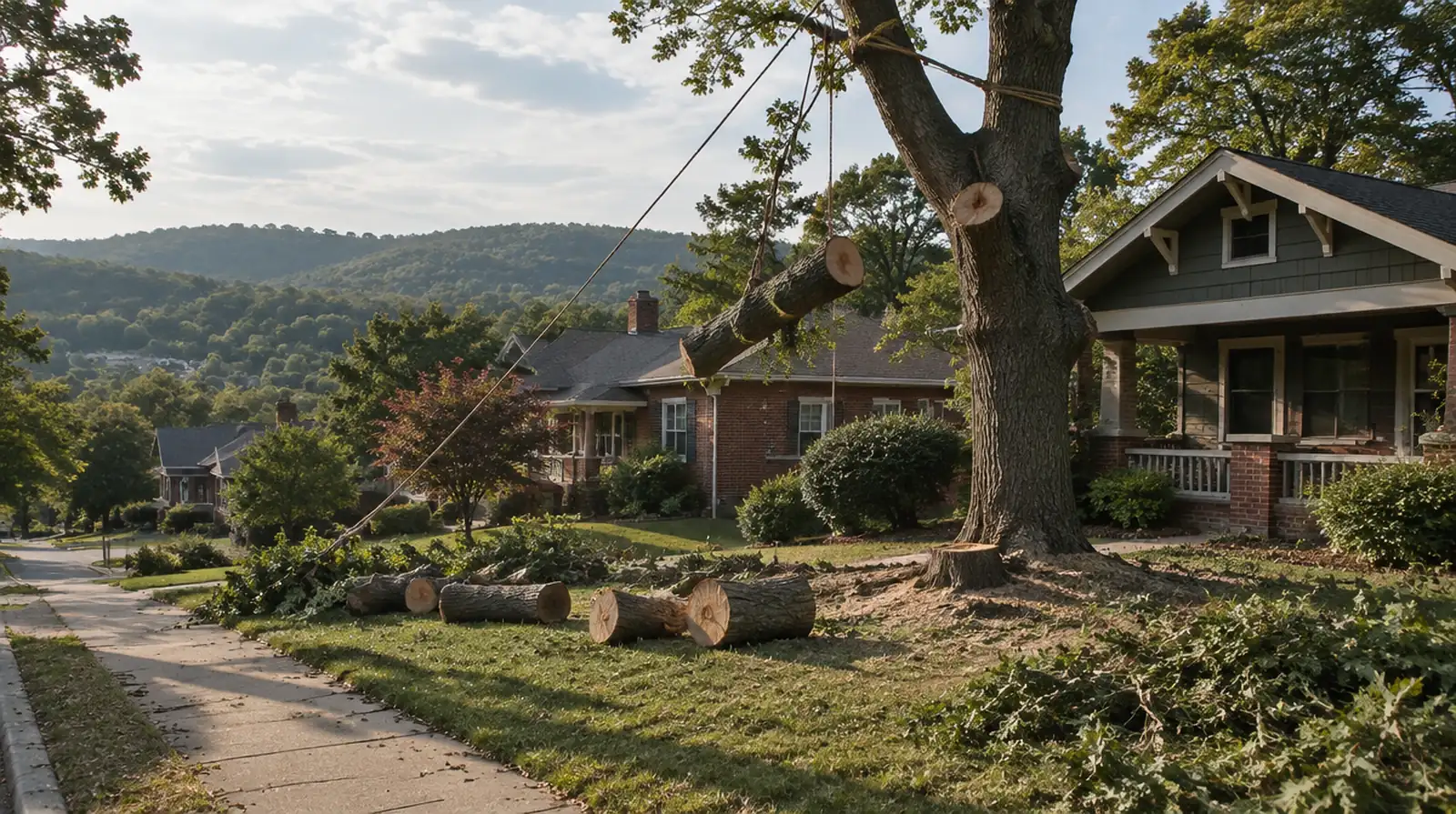
Most Fayetteville removals are not a straight fell
On an open acre you notch a tree, put in a back cut, and it lands where you planned. Almost nobody in town has that. What we deal with most days is a large oak or hickory boxed in by a roofline on one side, a privacy fence on another, and a service drop running through the canopy.
Those come down from the top. A climber ascends with a saddle and rope, or we set up from a bucket where the driveway allows it, and the tree is dismantled in pieces small enough to be lowered under control. Each limb is rigged, cut, and let down on a line to the ground crew rather than dropped. It is slower and it is the reason the job costs what it does, but nothing lands on your roof.
Trees we take down most often
- Storm-damaged hardwoods with a split trunk or a hanging leader
- Dead or declining oaks holding brittle limbs over a house
- Silver maples and Bradford pears that have started coming apart at weak branch unions
- Trees lifting a driveway, foundation or sidewalk with surface roots
- Anything leaning toward a structure with fresh soil heave on the opposite side of the base
If it is already on the house, do not wait for a quote. Call (479) 317-8391. See our emergency storm damage service for what happens next.
What is included
A removal quote from us covers taking the tree down, cutting it into manageable rounds, chipping the brush, and hauling the debris off your property. We rake and blow the work area before we leave. You should not be finding chips in the flowerbed for a month.
The stump is priced separately because not everyone wants it out. Grinding leaves you able to sod or replant over the spot, and you can read how that works on our stump grinding page. If you want the wood, say so and we will leave rounds stacked wherever you like at no extra cost.
Power lines and permits
If a tree is touching or within striking distance of an energized line, the utility has to be involved before anyone climbs. We will tell you plainly if that is your situation and help you get the drop disconnected rather than working around it. No reputable crew rigs next to a live service drop to save you a phone call.
Trees in the city right-of-way and certain protected or heritage trees can carry municipal requirements. If your removal looks like it falls into that category, we will flag it at the estimate so you are not surprised.
Getting a number
We come look. Height, diameter, condition, what is underneath, and whether the truck and chipper can get close are what set the price, and none of those can be judged over the phone. The written estimate is what you pay unless you add work.
How we decide whether a tree should come out
Not every tree someone calls us about needs to be removed. A big limb over the garage can often be reduced or taken off by itself, and a tree with one bad leader can sometimes be kept with cabling and bracing. We would rather tell you that than sell you a takedown you did not need. When removal is the right answer, it is usually because the trunk or root plate has failed, decay has hollowed out the main stem, or the tree is simply in the wrong spot for the house that was built next to it.
Trees that are already dead or visibly failing are a separate category, because the wood behaves differently when it is cut and rigged. Brittle, dry limbs can snap under the load of a rope, so we plan those jobs around that. Our hazardous tree removal page explains how that work differs.
What a removal day looks like
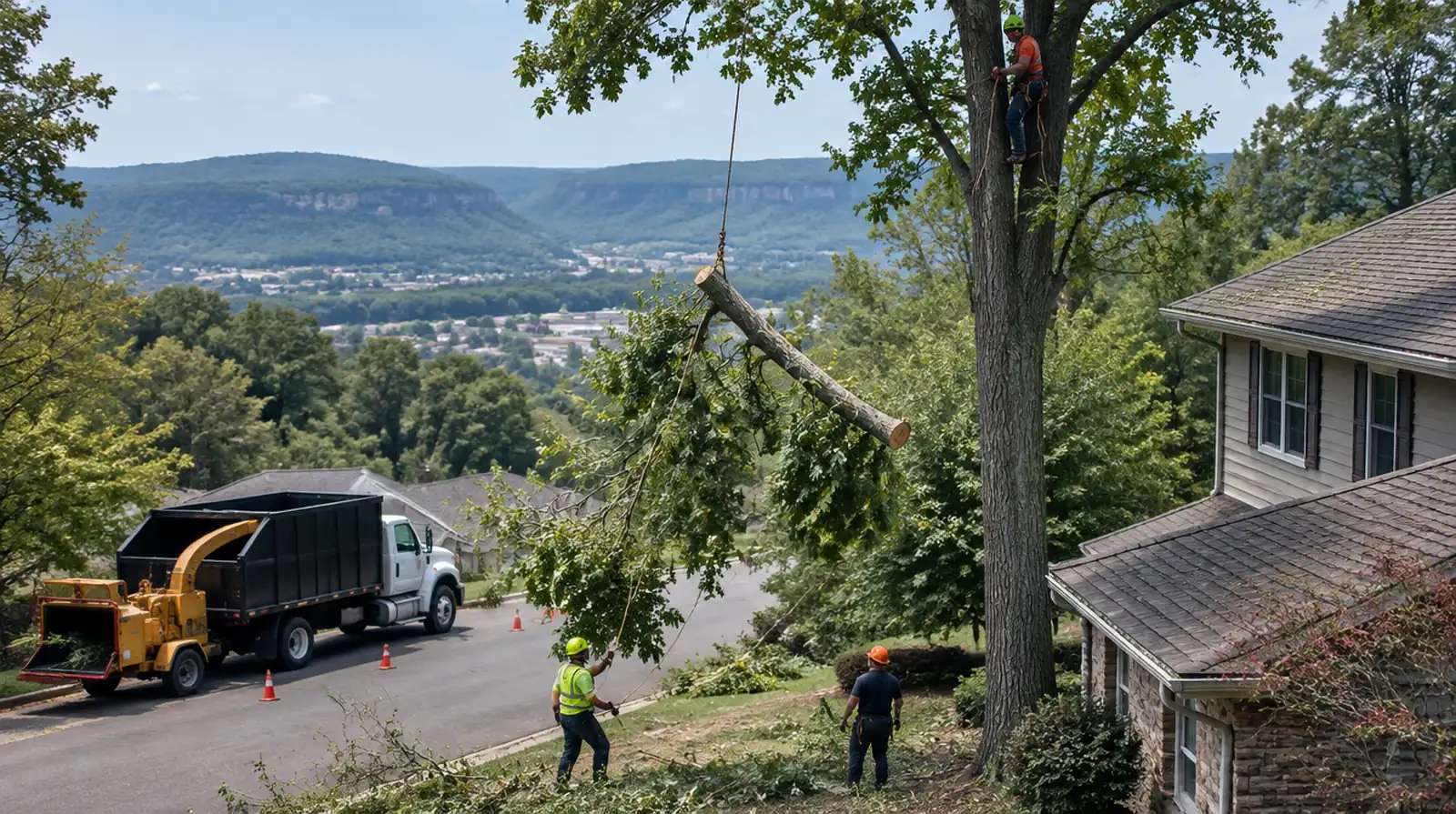
We park the truck and chipper where they block the least, lay plywood over soft lawn if the ground is wet, and walk the drop zone with whoever is home. The climber goes up, the ground crew sets the lowering lines, and the tree comes down from the top in a sequence planned before the first cut. Brush goes straight to the chipper so the yard does not fill up with piles. The trunk usually comes down last, in rounds short enough to handle safely.
On hillside lots, which Fayetteville has plenty of, we take extra care with where rounds go once they hit the ground, because a section of oak trunk will roll farther than most people expect. When the tree is down, we clean up, walk the yard with you again, and talk through the stump if it is part of the job.
If you are clearing more than a tree or two, such as an overgrown fence line or a lot you plan to build on, see our land clearing service.
Removals are scheduled year-round. Winter is often a good time for a planned takedown, because the leaves are down, the ground is firmer in a cold snap, and garden beds under the tree are dormant.
Get a removal quote
Tell us what you're dealing with and we'll get back to you with a no-obligation quote. Most estimates are free and on-site.