Tree Planting in Fayetteville, AR
Whether you are replacing an old oak lost to an ice storm or shading a new house on the west side, we plant trees that fit Fayetteville's hills, rocky clay and hot summers.
(479) 317-8391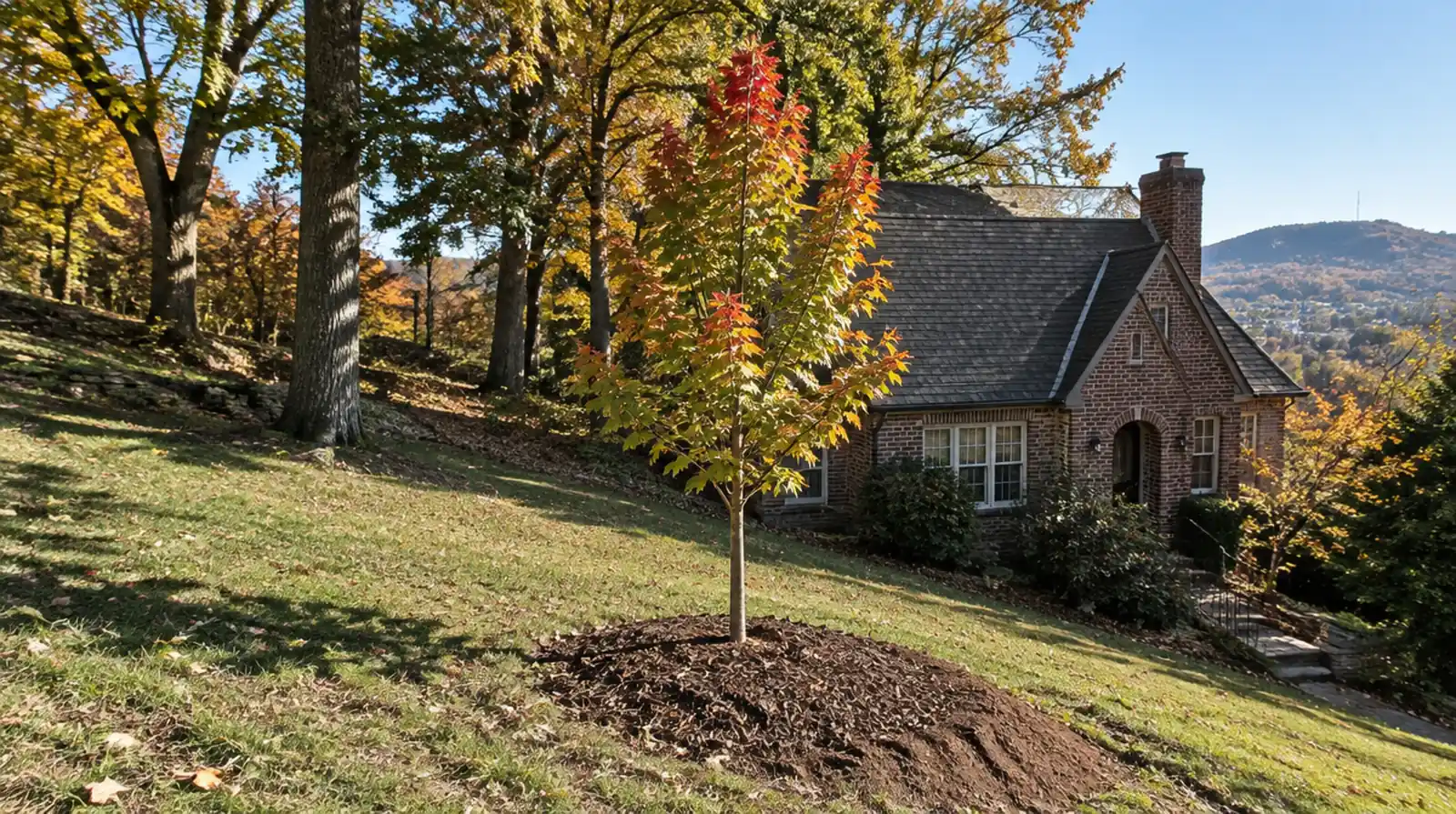
Replacing what storms and age took
Fayetteville's older neighborhoods, from Wilson Park and Washington-Willow to the streets climbing Mount Sequoyah, are shaded by oaks and hickories that are now 70 to 100 years old. Every ice storm takes a few more. The 2009 ice storm stripped trees all over Northwest Arkansas, and many yards never got the shade back. Planting a replacement tree now is how a street keeps its canopy for the next owners.
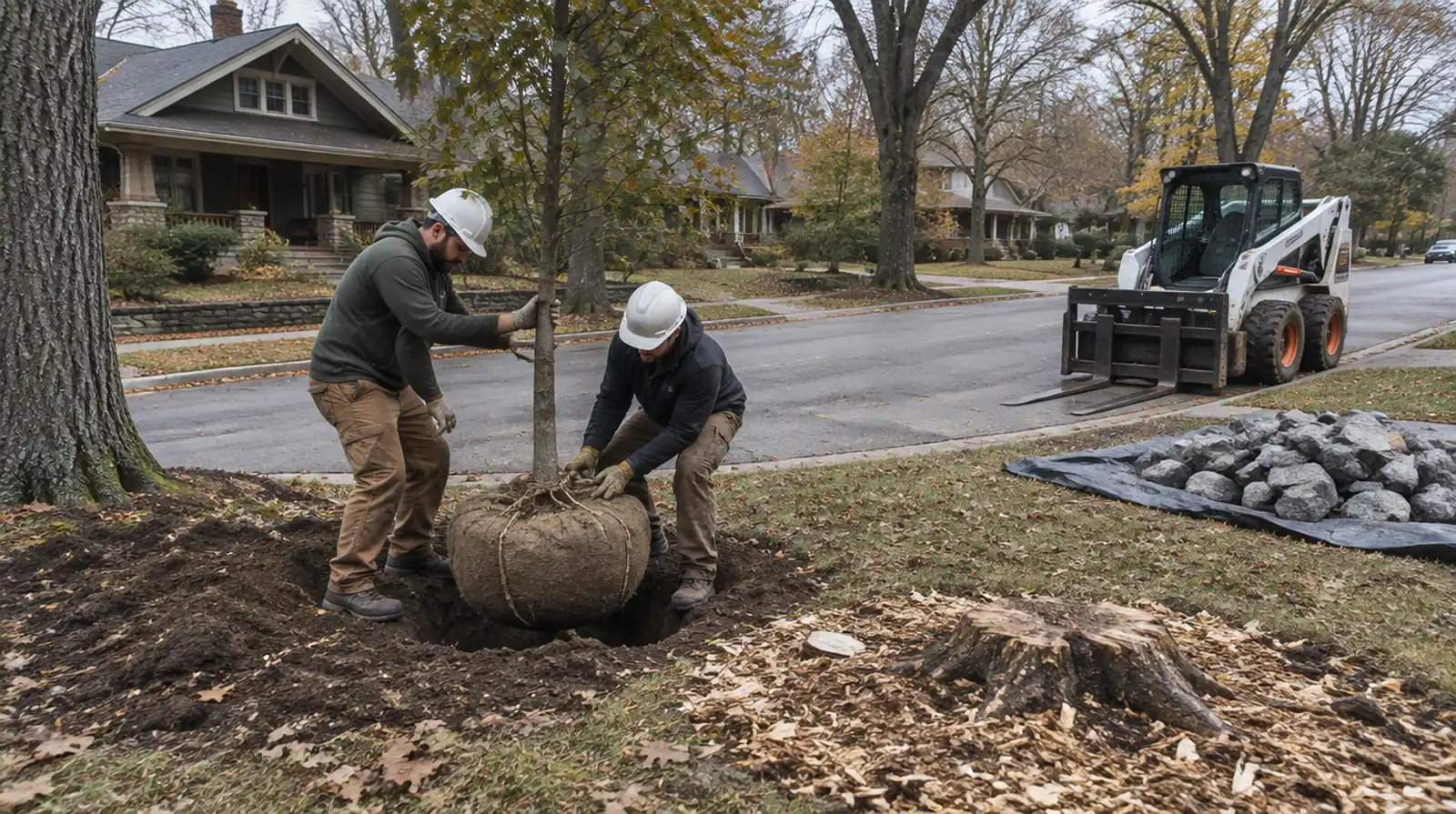
When we remove a tree, we can plan the replacement at the same visit. The new tree usually should not go exactly where the stump was, since the old roots and grindings take years to break down. A spot a few feet away gives the new roots clean soil.
Native trees we recommend
- White oak and Shumard oak for long-lived shade in larger yards.
- Sugar maple, native to Ozark hollows, for north- and east-facing slopes that stay cooler.
- Black gum and sweetgum for low or damp spots, with the caution that sweetgum drops spiky balls.
- Flowering dogwood and redbud as smaller trees under taller canopy or near the house.
- River birch and bald cypress near drainage swales and rain gardens.
We steer clear of Bradford pear and other Callery pears, which break up in ice and spread into the Ozark woods.
Planting on Fayetteville slopes
Hillside lots shed water fast, so a tree planted on a slope can go thirsty while the lawn below stays wet. We set the tree so its root flare sits level with the uphill grade and build a low soil berm on the downhill side to hold water over the root ball. Mulch spread wide, not piled against the trunk, keeps the soil cooler and slows runoff. On steep banks we choose deep-rooted natives that help hold the soil.
Rocky clay and chert
Fayetteville soils are a rocky clay full of chert that can be hard to dig and slow to drain. Narrow, deep holes act like buckets and drown roots in spring. We dig wide, shallow holes, rough up the sides so roots can push through, and backfill with the soil that came out, minus the big rocks. Amending only the hole tends to keep roots from venturing into the surrounding ground.
Timing
The best window is October through early December, and the next best is late winter into early spring. Soil stays workable most of the winter here, so roots keep growing in cool weather while the top is dormant. Planting in June or July is possible with container trees but needs careful watering.
City rules and new construction
Fayetteville has a tree preservation ordinance that sets canopy requirements for new development, and some building projects must plant trees to meet them. If your project falls under it, we can plant to the approved plan. For a regular home yard, no permit is usually needed to plant a tree, but you still need a utility locate before digging, and trees under power lines should be small species.
Aftercare
Plan on deep watering weekly for the first two summers, and more often during heat waves. We prune new trees only to remove broken branches at planting, then come back in a few years for structural pruning that sets up a strong trunk and branch spacing.
Small lots and power lines
Under utility lines, along narrow side yards and near the house, choose trees that stay small. Eastern redbud, serviceberry and flowering dogwood are Ozark natives that top out well below the lines and give spring color. Keep large shade trees at least 15 to 20 feet from the foundation and away from sewer laterals, and call 811 before any digging so buried lines are marked.
Questions
Can you plant several trees at once?
Yes, from a single yard tree to a row along a fence line.
Do you guarantee trees?
We explain our terms at the estimate. Watering is the biggest factor in survival.
Plan your planting
Call (479) 317-8391 and we will walk the yard with you, suggest species and price the planting.
Ask about planting trees
Tell us what you're dealing with and we'll get back to you with a no-obligation quote. Most estimates are free and on-site.